Keynote Speakers
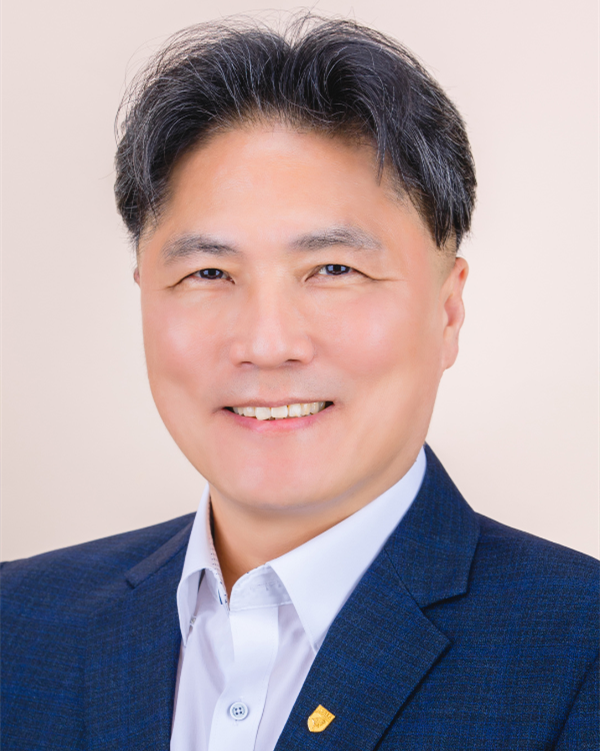
Prof.
Minho Jo
IEEE Senior Member, Korea University, South Korea
Minho Jo
(Senior Member, IEEE) received the B.A. degree from the Department of Industrial
Engineering, Chosun University, Gwangju, South Korea, in 1984, and the Ph.D.
degree from the Department of Industrial and Systems Engineering, Lehigh
University, Bethlehem, PA, USA, in 1994.He is the Full Professor with the
Department of Computer Convergence Software, Korea University, Sejong, South
Korea, where he is the Director of the IoT & AI Lab. Prof. Jo is the Director of
Brain Korea 21 "IoT Data Science" supported by the Korean government. Prof.
Minho Jo is named in the 2024 World’s TOP 2% Scientists List, which is made by
Stanford University and Elsevier. His current research interests include IoT,
blockchain, LLM/ChatGPT, artificial intelligence and optimization theory, big
data, network security, cloud/edge computing, wireless energy harvesting, and
autonomous vehicles. The average number of citations per publication authored by
Prof. Minho Jo (from 2013 through 2022) is 41.7 and Average Field-Weighted
Citation Impact (FWCI) of Prof. Minho Jo (from 2013 through 2022) is 4.42 (based
on SCOPUS SciVal. Exactly FWCI = 1 means that the output performs just as
expected for the global average. FWCI = 4.42 means 342% more cited than the
global average.)
Prof. Jo is a recipient of the 2018 IET Best Paper Premium Award by the United
Kingdom's Royal Institute of Engineering and Technology. He was awarded with
2011 Headong Outstanding Scholar Prize. He is one of the founders of the Samsung
Electronics LCD Division. He is the Founder and the Editor-in-Chief of KSII
Transactions on Internet and Information Systems (SCIE/JCR and SCOPUS indexed.
https://itiis.org). He was the South Korea's Presidential Commission on Policy
Planning. He served as an Associate Editor of IEEE SYSTEMS JOURNAL, IEEE ACCESS,
IEEE INTERNET OF THINGS JOURNAL, Editor of IEEE WIRELESS COMMUNICATIONS, and
Editor of NETWORK, respectively. Prof. Minho Jo is the Chair of the 5th IEEE
International Conference on Advanced Information and Communication Technologies
(AICT 2023), and the General Co-Chair of VTC2021-Fall (2021 IEEE 94th Vehicular
Technology Conference), respectively.
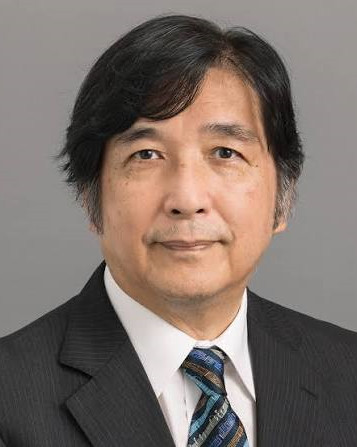
Prof. Issei Fujishiro
Professor, Faculty of Global Media Studies, Komazawa University, Tokyo,
Japan
Professor Emeritus, Keio University, Yokohama, Japan
Prof. Issei
Fujishiro received his M.E. from the University of Tsukuba in 1985 and his
Doctor of Science from the University of Tokyo in 1988. Prior to joining
Komazawa University in 2026, he held faculty positions at the University of
Tokyo, the University of Tsukuba, Ochanomizu University, Tohoku University, and
Keio University. At Keio University, he was named an Honorary Alumnus in 2015,
received the Keio Gijuku Award in 2025, and was appointed Professor Emeritus in
2026.
With more than four decades of research experience in visual computing, Prof.
Fujishiro has made significant contributions to modeling paradigms and shape
representations, visualization design and lifecycle management, and smart
multimodal ambient media. He has authored more than 500 publications, including
391 original research papers and 110 survey articles, has been granted three
patents, and has authored or edited 42 books, including the widely used Japanese
textbooks Computer Graphics (CG-ARTS, 2015) and Visual Information Processing
(CG-ARTS, 2017). His research has been recognized with numerous honors,
including the Elsevier Graphical Models Most Cited Paper Award, the CG Japan
Award from the Society for Art and Science (SAS), the Hagura Prize, and the
IEICE Outstanding Education Award, among a total of 78 awards and honors.
Prof. Fujishiro has been a leading contributor to the international
visualization and computer graphics communities. He has served as an Associate
Editor of several major journals, including IEEE Transactions on Visualization
and Computer Graphics, Computers & Graphics, Visual Informatics, Computers &
Education: X Reality, and The Visual Computer, and has guest edited 13 special
issues of international and domestic journals. He has also served on the
Steering Committee of the IEEE SciVis and the IEEE PacificVis. In addition, he
has chaired 41 international conferences—including IEEE PacificVis, IEEE VIS
(SciVis), CG International, Cyberworlds, ACM VRCAI, TopoInVis, and PacificVAST.
He has served as President of the Visualization Society of Japan, President of
the Institute of Image Electronics Engineers of Japan (IIEEJ), and a Vice
President of the Society for Art and Science (SAS). He currently serves as an
Associate Member of the Science Council of Japan, a Director of the
International Information Science Foundation, and a Trustee of CG-ARTS.
Prof. Fujishiro is a Fellow of the Japan Federation of Engineering Societies and
the Information Processing Society of Japan, an Honorary Member of IIEEJ, a
Senior Member of IEEE and ACM, and a member of Eurographics, the Computer
Graphics Society, and IEICE. He was inducted into the IEEE Visualization Academy
in 2021.
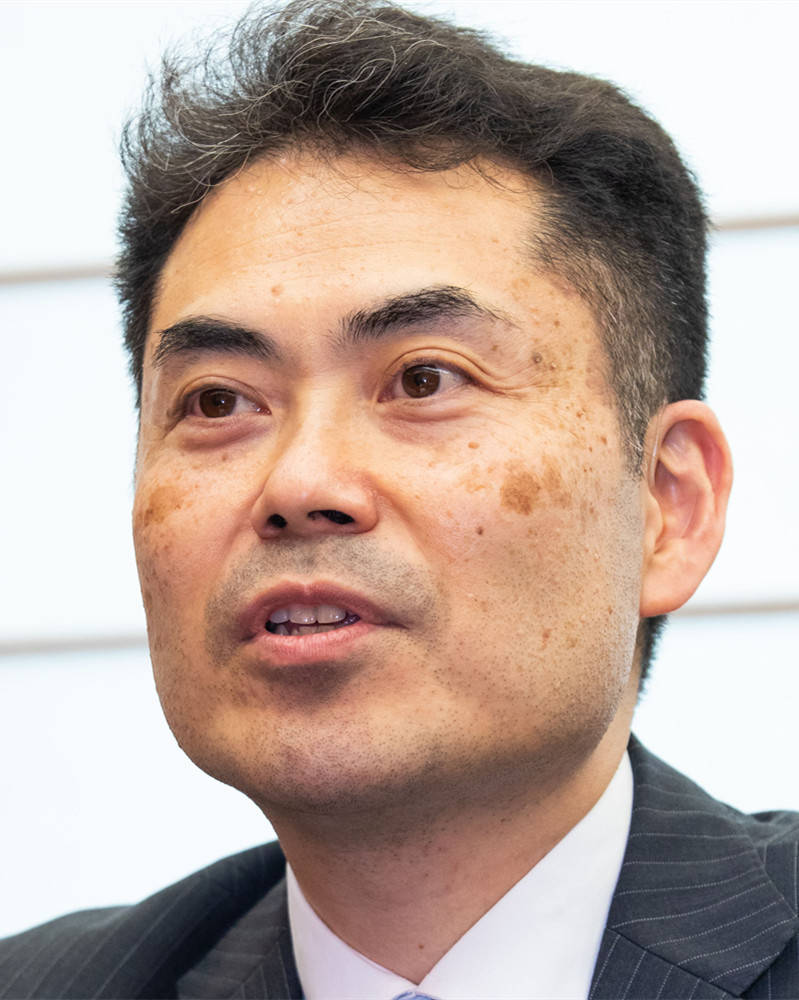
Prof. Kiyoshi Kiyokawa
Nara Institute of Science and Technology, Japan
Kiyoshi Kiyokawa
is a Professor at the Nara Institute of Science and Technology (NAIST), where he
leads the Cybernetics and Reality Engineering (CARE) Laboratory. He is a
distinguished researcher in virtual reality (VR), augmented reality (AR), and
human augmentation. Professor Kiyokawa received his M.S. and Ph.D. degrees from
NAIST in 1996 and 1998, respectively. His career includes positions as an
Associate Professor at Osaka University, a researcher at the Communications
Research Laboratory (now NICT), and a visiting scholar at the University of
Washington’s Human Interface Technology Laboratory. His significant
contributions have been recognized with numerous accolades, including the 2022
IEEE VGTC Virtual Reality Technical Achievement Award, the inaugural 2022 IEEE
VGTC Virtual Reality Service Award, and the title of Fellow from the Virtual
Reality Society of Japan (VRSJ).
Professor Kiyokawa's research has resulted in several pioneering technical
achievements. He is known for developing advanced head-mounted display (HMD)
systems, including ELMO, the first occlusion-capable optical see-through HMD in
1999. His foundational work also includes VLEGO, one of the first collaborative
immersive modelers, and SeamlessDesign, which featured the first transitional
interface for switching between VR and AR. His research extends to vision
augmentation and assistive interfaces, collaborative virtual and augmented
reality, and innovative multimodal interfaces.
Beyond his research, Professor Kiyokawa has demonstrated a profound dedication
to the academic community through extensive service and leadership. He has
served on the Steering Committees for top-tier conferences, including IEEE VR,
IEEE ISMAR, and IEEE 3DUI. His leadership roles are numerous, having served as
General Co-Chair for IEEE VR 2019 in Osaka, which was the largest in-person
conference in its history at the time. Additionally, he is on the Editorial
Board of IEEE Transactions on Visualization and Computer Graphics (TVCG) and has
frequently been a Board Member of the VRSJ.
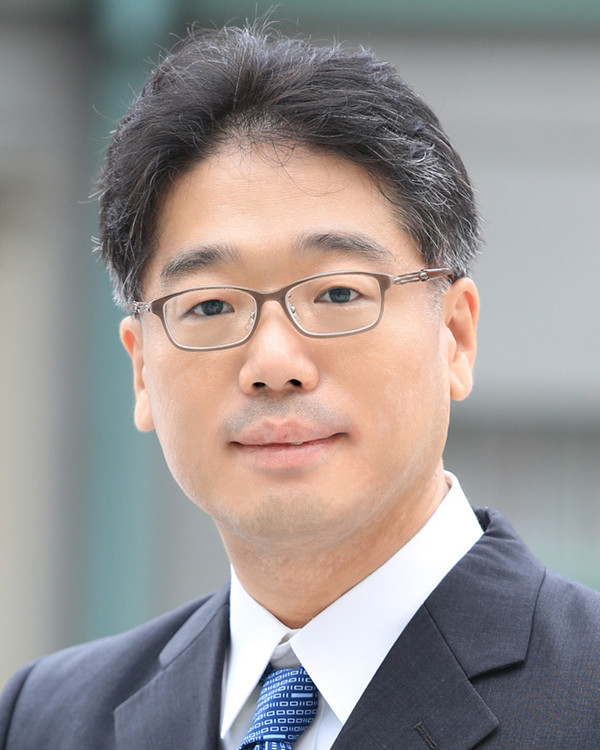
Prof. Masaki Oshita
Kyushu Institute of Technology, Japan
Masaki Oshita is a Professor in the Department of
Artificial Intelligence, Graduate School of Computer Science and Systems
Engineering, at Kyushu Institute of Technology. He received his B.E., M.E., and
Ph.D. degrees from Kyushu University in 1998, 2000, and 2003, respectively. He
joined Kyushu Institute of Technology as a Lecturer in 2003, served as an
Associate Professor from 2004, and has been a Professor there since 2022.
His research spans a broad range of areas, including computer animation,
computer graphics, and human–computer interaction. Within these areas, he has
focused particularly on computational methods for human motion processing. His
research interests include human motion generation, manipulation, and editing,
as well as motion analysis and visualization. He has published research papers
in major international journals and conference proceedings in these and related
fields.
Prof. Oshita served as Program Co-Chair of International Conference ACM SIGGRAPH
VRCAI 2015 and has served on the program committees of several international
conferences, including ACM Symposium on Virtual Reality Software and Technology
(VRST), International Symposium on Visual Computing (ISVC), and International
Conference on Computer Animation and Social Agents (CASA). He has also reviewed
manuscripts for a number of international journals, including Journals IEEE
Transactions on Visualization and Computer Graphics, The Visual Computer, and
Computer Animation and Virtual Worlds.